When discussing gothic metal, it’s hard not to think of legends like
Paradise Lost,
My Dying Bride,
Moonspell,
Katatonia, or even Cradle of
Filth. These bands, while rooted in metal, infused their work with a gothic aesthetic and emotional sensibility, though they rarely delved deeply into a truly gothic sound. There are, of course, notable exceptions:
Moonspell’s Irreligious and
Sin/Pecado,
Tiamat’s A Deeper Kind of
Slumber, or even
Dreadful Shadows’
Beyond the
Maze, where gothic rock and metal blend more naturally.
Today, what’s labeled as gothic metal often seems to have settled into a predictable formula, rehashing structures popularized by bands like
Tristania,
The Gathering, Theatre of Tragedy,
Katatonia, and
End of Green. In this context,
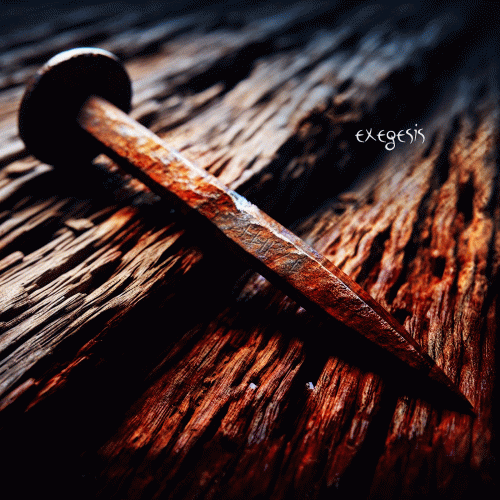
Exegesis, Selikal’s latest work, takes the opposite approach. It isn’t simply a metal record with a touch of gothic influence; it’s an album deeply rooted in gothic rock that toughens its sound to fully embrace a metal atmosphere. From the opening chords,
Exegesis evokes the drama and density of projects such as Fields of the
Nephilim,
Shadow Project,
Eterne,
Last Rites, and
Lucyfire. Its sound shifts between classic darkwave, gothic rock, and hints of doom and thrash metal, all wrapped in a production that favors depth and texture over instant impact.
This isn’t an album for casual listening, its many layers demand full attention, gradually revealing subtle nuances with every play.
Far from pandering to current genre clichés with easy hooks and predictable formulas,
Exegesis offers an introspective, atmospheric journey where melancholy and darkness take shape. It’s the kind of record that unfolds over time, much like the finest works in the genre.
Tracks like Stupid Kind of Love and
Excess could easily be real bangers, with deep, straightforward melodies over a solid, driving rhythm section.
Meanwhile,
Companion is a perfect example of gothic metal with character, bridging the sonic realms of
Anathema and
Tiamat. The album also ventures into darker, more atmospheric territory;
The Eyes on the Curtain recalls the
Moonspell of the Irreligious era, though with a more mystical, somber vibe. In contrast, Poetry Is to Be Lived draws you into an introspective, almost spoken-word moment, its darkwave aura evoking
Sopor Aeternus without the heavy guitars.
And finally, the longest track, Double Edge, combines the essence of the entire album with clear progressive touches from both rock and metal, marking an end for this magnificent record,
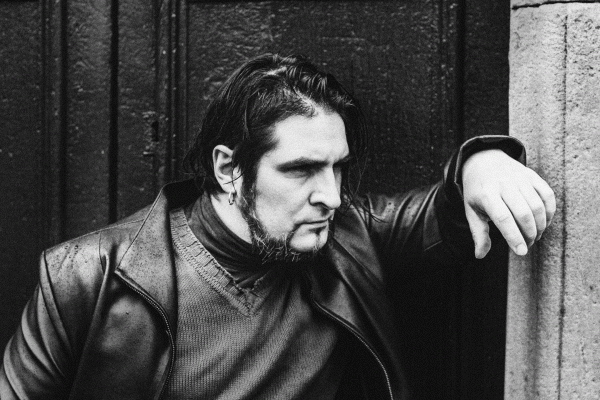
Exegesis, but, let’s hope, not for the work of such an artist, Selikal.
I can’t wait to see him live. An album of this quality deserves to be experienced in its full intensity.



你必须先登录才能发表评论